Showing posts with label homosexual. Show all posts

Tuesday, September 9, 2014

Will HIV Ever Be Safe Enough for You?


This post originally appeared on Mark S. King's Blog.
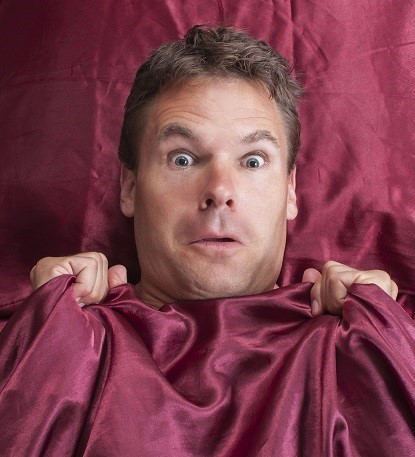
Scary nightmareThere is a classic episode of Oprah from 1987 that can still raise my blood pressure. That year, the tiny town of Williamson, West Virginia, became part of a national discussion about AIDS when Mike Sisco, who had returned to his home town to die of the disease, dared to step into a public pool.
The community freakout was immediate. Sisco was quickly labeled a psychopath (rumors emerged accusing him of spitting into food at the grocery store), and the town pool was closed the next day to begin a Silkwood-style pressurized cleaning.
Soon thereafter, Oprah Winfrey arrived with cameras for a town hall forum about the incident.  Fear was the order of the day. “If there’s just one chance in a million that somebody could catch that virus from a swimming pool,” the town’s mayor told Winfrey’s worldwide audience, “I think I did the right thing.”
Sure. Why not react in the most extreme way possible, if there is a chance in a million?
Williamson citizens were not swayed by health officials who calmly explained the established routes of HIV transmission and the impossibility of infection from a pool. “The doctors can say you can’t get it this way,” a woman countered, “but what if they come back someday and say, ‘We were wrong?’”
Indeed. What if? If there’s a chance in a million…?
That broadcast might have remained a sad footnote in HIV/AIDS history, an instructive example of people ignoring scientific fact to protect a satisfying fear, if history didn’t enjoy repeating itself so much. Today, though, the willful ignorance isn’t coming from uneducated residents of a southern town you can barely find on a map.
It’s coming from gay men. And they are just as threatened, frightened, and dismissive of science as the townsfolk of Williamson were thirty years ago.
Recently, research known as The PARTNER Study was presented at the prestigious Conference on Retroviruses and Opportunistic Infections (CROI). PARTNER proved something HIV advocates have long suspected: people with HIV with an undetectable viral load are not transmitting the virus to their partners. The study included nearly 800 couples, all involved in an HIV positive/negative relationship, gay and straight, with the positive partner maintaining an undetectable viral load. Over the course of two years, more than 30,000 sex acts were reported and documented (couples were chosen based on their tendency to have sex without condoms).
Not a single HIV transmission occurred during the study from someone with an undetectable viral load. If PARTNER had been researching a new medication, they would have stopped the trial and dispensed the drug immediately.
The PARTNER results bolster the prevention strategy known as “Treatment as Prevention” (TasP), meaning, a positive person on successful treatment prevents new infections. To date, there is not a single confirmed report of someone with an undetectable viral load infecting someone else, in studies or in real life.
Just don’t tell that to a sizable contingent of skeptical gay men, many of whom took to their keyboards to dismiss the PARTNER findings. Phrases like “false sense of security,” “positive guys lie,” “junk science,” and “if there’s even a small risk” appeared on Facebook postings and in web site comment sections. The people of Williamson must be slowly nodding their heads.
Resistance to the PARTNER study corresponds with stubborn doubts about PrEP (pre-exposure prophylaxis, or HIV negative people taking the drug Truvada to prevent infection). Although virtually every nervous argument against PrEP has been overruled by the facts, naysayers continue to either reject the evidence outright or make moral judgments about the sex lives of HIV negative gay men on PrEP.
Yes, there are unknowns. There always are when scientific studies meet the real world. And every strategy will not work for every person. But the vehement rejection of such profound breakthroughs suggests there is something more, something deeper, going on in the minds of gay men. What is it?
Our collective memories of AIDS horror are hard to shake, and that’s a good place to start. On a gut level, any study suggesting that HIV could be neutralized is met with a weary doubt. Good news is no match for the enduring grief that has shadowed us for 30 years.
The PARTNER study also threatens the view that positive men are nothing more than risks that must be managed. The study kills the HIV positive boogeyman. It means positive gay men who know their status might actually care enough about their health to seek out care, get on treatment, and become undetectable. And, once the positive partner is no longer a particular danger, both partners would bear responsibility for their actions. What an enormous psychic change that would require in our community.
It’s tough to do that when fear creeps in and “what if?” fantasy scenarios take hold. What if my partner missed a dose yesterday and, even though HIV meds stay in the bloodstream for extended periods, his viral load has inexplicably shot up? What if he isn’t being truthful about his viral load? What if he doesn’t know?
The greater threat, folks, isn’t positive guys who think they are undetectable but are not. It’s men who think they are HIV negative but are not. But we’d rather stay focused on the positive person being at fault, because, well, people with HIV lie a lot. We miss doses constantly because we have a death wish or we’re too busy finding our next victim.
I have some “what if?” questions of my own. What if these unrealistic fears were meant tostigmatize and isolate HIV positive people? What if I am undetectable and feel no responsibility to discuss my status with a sex partner because I don’t care to engage in a science lesson? What if everyone availed themselves to prevention options that worked best for them? What if my HIV status were none of your damn business?
These risks could be alleviated, of course, if everyone simply protected their own bodies when having sex with people they don’t know or trust. But that would place an equal burden on negative men, and what a bother that is.  Better to leave that discomfort to those with HIV, vectors of disease that we are. Just consider us criminals, lying to you about our viral loads and spitting in the food in Williamson, just waiting to infect you when we get the chance.

As long as we’re giving undue attention to fantasy scenarios we’re not focused on the real threats. The rates of STD’s are up. Young gay black men in the United States don’t have proper access to healthcare and have infection rates worse than any developed country. Our community is plagued by  alcoholism, addiction, and mental illness. Do we want to debate established science or should we devote that energy to other challenges to gay men’s health?
If you still have the arrogance to believe you could win the HIV Powerball Lottery and be the one person who gets infected in ways science has disproven, you’re perfectly entitled to that point of view.
Here are some helpful instructions, however. Carefully step away from your computer and don’t touch the cords because 50 people die of product related electrocutions each year. Walk slowly to your bedroom, being mindful of debris in your path because slip-and-falls kill 55 people every single day. Once there, refuse food or water because, well, you never know. Now slip into your bed of willful ignorance and try to make yourself comfortable.
The good people of Williamson are keeping a spot warm just for you.
Mark
p.s. In the time it took you to read this article, the number of people who were infected by someone with HIV who had no viral load was zero.
-------------------------------
Thank you to Mark for allowing us to share this post. If you would like to know more about his work, you can follow his twitter feed here.

Wednesday, September 3, 2014

Supporting Social Change to Curb Violence and Eliminate HIV in Guyana, by Anne Stangl of ICRW


*This blog originally appeared on ICRW

As I fly home from the humid, vibrant and bustling Georgetown, the capital city of Guyana, I am a bit overwhelmed by the daunting task the country faces to address the high levels of intimate partner violence, sexual assault, child abuse and suicide in the country.
Over the last week, my colleague Jocelyn Lehrer and I had the privilege of speaking with people working at community-based organizations throughout the country who are an integral part of tackling these challenges. Peer educators, social workers, nurses, counselors, people living with HIV, LGBT advocates, and survivors of violence all took time from their important work to speak with us about their efforts to create a path forward for Guyana.
My visit to the South American nation was the kick-off trip for ICRW’s grant work under Advancing Partners & Communities (APC), a USAID funded project, implemented by JSI Research & Training Institute, Inc., in partnership with FHI 360. ICRW is assisting in the implementation of the project in Guyana over the next three years, helping to strengthen the capacity of local organizations in Guyana to provide HIV prevention, care and treatment services to key populations at heightened risk of HIV infection, including women, men who have sex with men, transgender individuals and sex workers. Reaching these populations is critical for eliminating new HIV infections in Guyana, but extremely challenging, as these groups face high levels of stigma, discrimination and violence in society.
Given mounting global evidence that sexual assault and partner violence are directly linked with HIV infection, it is crucial for Guyana to tackle these key drivers of the HIV epidemic head-on.
During the trip, I learned of the great work these organizations and individuals are doing to support survivors of gender-based violence and to ultimately break the cycle of violence so that no woman or girl has to experience it in her daily life. From training police to be gender- and LGBT-sensitive, to supporting abused women, men and transgendered individuals in accessing justice, to sheltering women and children when their homes are unsafe, I could see firsthand that change is coming to communities in Guyana.
And while these conversations gave me great insight into the powerful individuals working to reduce violence in Guyana, I did see something worrying.
In interview after interview, themes began to emerge: Gender-based violence is pervasive. Services for survivors are limited or very difficult to access. Marginalized populations such as men who have sex with men, transgendered individuals and sex workers are at heightened risk of experiencing violence. Resources are limited for carrying out community- and national-level programs to change harmful gender norms and break the cycle of violence.
The stories shared by these frontline workers were reinforced daily by headlines in the local newspaper: a police officer charged with sexually assaulting a young man with a wooden police baton; a 23 year old who murdered his 14-year-old girlfriend and then hung himself. 
Despite these challenges and the ubiquitous headlines, I am cautiously optimistic about what we can accomplish.
On our final evening in Georgetown - the country’s largest urban center- we attended a production of “Before Her Parting” at the National Cultural Center. The play was written by Mosa Mathifa Telford, directed by Tivia Collins and staged by Merundoi Incorporated - a community-based organization that utilizes entertainment to educate the public, affect individuals’ attitudes and behaviors, and shift social norms. The gripping drama portrays a reality that’s all too common in Guyana in which young woman is murdered by her husband, who then kills himself. The plot could have been ripped straight from recent headlines.
The play also explores the intergenerational cycle of abuse that fosters violence generation after generation in Guyanese society: A woman is abused by her husband and is violent toward her son; her son grows up to beat and ultimately murder his wife, and the cycle continues. The play was followed by a facilitated discussion with the more than 400 audience members, ranging from students to teachers to civil servants, and a panel of speakers from various government institutions. It was heartening to hear these young Guyanese demand both action to reduce violence and expanded services to support survivors.
It is my hope that though USAID’s Advancing Partners and Communities Initiative, ICRW and John Snow International will be able to strengthen the capacity of local organizations so they are better equipped to respond to gender-based violence in Guyana and can continue to facilitate social norm changes to reduce violence and reduce the spread of HIV infection.
Above all, from my time in Guyana, I saw hope and determination. Hope that the next generation will not see the type of endemic violence that has pervaded Guyana for decades, and be determined to tackle these problems head-on. It’s important that those of us in the global community echo that hope and determination, too. We need to ensure that community workers and advocates have the tools to end these human rights violations as well as to empower women and girls to live free from fear of violence or abuse.
---
Thank you to Anne for allowing us to share this post. If you would like to know more about what Anne does at ICRW, check out her twitter feed.

Monday, December 23, 2013

An Interview with "James" by Brian Fuss

The following is from an interview with James (not his real name) an HIV+, gay male, sex worker, pro-Dom, and former drug user.  Thank you for sharing your story, James.

James grew up in a Midwest town Pentecostal family where religion and family were constantly reinforced by their twice a week church attendance. James remarked, “All of my friends were from that church; in fact, I did not know anyone other than church members.” At the age of 16, after struggling with his sexuality “forever,” James shared with his older sister about being gay. James stated, “My sister betrayed me and told my parents and this ensued a shit storm in my life.” His parents demanded he “repent of his homosexual, evil ways and go back to loving the Lord.” However, James knew he could not deny who he was, and told his parents as much. His parents threw him out of the house until “he properly repented and served the Lord.” Alone, hungry, scared with his last $100.00, James went to LA hoping a friend would help.

“The friend was a total asshole and basically had sex with me for a few days and then told me to beat it.” Now, completely alone, in a strange city, and frustrated, James had no idea what to do. Then, a kindly man offered him a warm bed and food. “He was a nice guy…at first he said I could just hang out until I got on my feet. Then he started to flash around a lot of money. When I asked him what he did, he said he worked in the porn and sex industry. This was more money than I saw in my whole entire life.” He became James’s mentor, telling him what porn shoots to go on and what places to stay away from. “The way to make more money was to do it (sex) raw (bareback), so of course I became that type of actor. I was making a lot of money between this and my lucrative escort business. With that came the partying, more sex, and HIV.”

“HIV completely changed my life. First, it [HIV positive status] got me into recovery.” James explained he left partying and entered (drug and alcohol) recovery and has been sober for 5 years. “Being an escort brings its own stigma, but it, honestly, is something I do not have to self-disclose, unless I want to date you…there is the rub…most guys are completely intrigued by my sex work, but hesitate to get involved with me because of it. I have heard numerous times…you are a great guy but I can’t be with (date) a hooker…I ain’t no hooker!” James further explained that HIV is the second hurdle that creates a lot of stigma in his life, both professionally and personally. “I have an obligation to tell clients, if they ask, about my HIV status (James explained he is 80% safe with clients and is undetectable) if they want to fuck raw.” James stated he has been single because no one wants a “HIV positive sex worker for a boyfriend, and that just hurts.”

I asked James two question, which I believe are important and pertinent to the discussion of stigma and I offer James’s answers in their entirety.

Many profiles on gay dating sites have the terms clean and dirty to describe someone who is HIV- verses someone HIV+. What are your thoughts? “I’m not dirty! When I see that shit, I just get pissed and usually say someone. Gay men can be so pathetic when it comes to HIV status. Think about the terms…because I am HIV+ I am somehow defective and should be ignored or worse cleaned up…it reminds me of what my parents said when they threw me out of the house…maybe I am just dirty.”
What is your advice to other young men in a similar situation? “You are more than your status, the drugs you take or the work you do! Don’t let anyone take your humanity away from you!”


In conclusion, James tells a story of stigma and shame from growing up gay in a Midwestern town to being a sex worker to being in recovery to being HIV+. It is estimated that more people delay treatment or refuse to get tested out of shame and stigma, especially if they are involved in the sex industry.

_ _ _ _ _ _ _
This interview was conducted by Brian Fuss of the Harm Reduction Coalition