Showing posts with label Africa. Show all posts

Monday, January 5, 2015

Growing up with HIV in sub-Saharan Africa: One Girl’s Story


By Jennifer Abrahamson
Senior Director, Strategic Communications, ICRW

This post originally appeared on ICRW's blog.

Growing up in this day and age can be difficult for anyone. Entering adolescence in particular can be extremely complicated, as boys and girls wrestle with new responsibilities, their futures and their sexuality. In many parts of sub-Saharan Africa, the risk of HIV infection adds another layer of complexity. For girls like Joyce*, who was born HIV positive, adolescence and early adulthood can prove especially challenging.
I met Joyce in a small courtyard tucked deep within a web of unpaved roads in a slum area of a sub-Saharan capital. Shy and unassuming, she looked much younger than her 17 years. She told me that she had dreams of becoming a lawyer someday, but it soon became clear that attaining that goal would almost certainly remain out of reach.
UGA081009161

Her story is heartbreaking. And because she fears being stigmatized, she hasn’t shared the depth of her plight with her neighborhood peers. Shortly after Joyce was born, her mother succumbed to AIDS. As she got older, her father grew increasingly ill and was largely unable to work. As a result, Joyce dropped out of school because she couldn’t afford the associated fees, and at the time we met, she had stopped taking her anti-retroviral (ARVs) medication in part due to the prohibitive cost of transport required to retrieve them from the hospital. I later learned that her father passed away a few hours after our meeting.
There are legions of girls like Joyce in sub-Saharan Africa who were born HIV positive and who are now coming of age while living with the virus, and facing enormous health challenges, as well as stigma and discrimination. And adolescent girls in many countries around the world are also at high risk for acquiring HIV because of social and institutional factors, including child marriage and gender-based violence.
ETH011512420Zambia is one such country. UNICEF estimated there were at least 80,000 adolescents living with HIV in Zambia in 2009. In order to better understand the challenges adolescent girls living with HIV face as they transition into adulthood, ICRW, in partnership with public health research organization, Zambart, is conducting a first-of-its kind qualitative study in the country with support from the MAC AIDS Fund.

The encouraging growth of home-based and provider-initiated HIV testing and counselling in Zambia will likely increase the number of adolescent girls who learn they are living with HIV in upcoming years. As a result, there will likely be an increased demand for treatment, care and support services in Zambia. Despite this burgeoning demographic of young Zambians living with HIV, psychosocial support and health care services for adolescent girls is limited. This deficit is worsened by the prevalence of HIV-related stigma and discrimination, as well as gender-based prejudice that affects the daily lives of girls living with HIV.
In an effort to address this gap in services, the ICRW-Zambart study is examining the unique stigma- and gender-related obstacles girls endure while facing some of the challenges of living with HIV such as adhering to medication regimens and clinical appointments, navigating safe sexual relationships, and handling the psychosocial challenges of learning of and disclosing their status. Through participatory workshops and interviews, ICRW will identify key challenges and stigma-related concerns surrounding HIV and pinpoint areas for intervention development to support healthy transitions to adulthood for these girls.
With this information, ICRW hopes to inform national programming and policies for adolescent girls living with HIV in Zambia. Beyond that, ICRW hopes this study will garner increased attention and action to address the needs and concerns of adolescents like Joyce living with HIV around the world, with a particular focus on addressing HIV-related stigma and discrimination.
As for Joyce, today she is doing much better, although she still faces many struggles. She recently celebrated her 18th birthday, she’s back on her ARVs and her health is improving every day, and she has joined a drama-troupe with other HIV-positive youth. Although finances are tight, she also has aspirations to enrol in a hotel management training course that will give her the tools needed to support herself, stay healthy and if not reach her ultimate dream of becoming a lawyer, to blossom into adulthood.
*Joyce is not her real name. To help support her education and daily needs, please write to Erin Kelly at ekelly@icrw.org. 

Wednesday, August 27, 2014

New Ugandan HIV and AIDS law jeopardizes health of women, men, and children

*This blog originally appeared on ICRW and Thomas Reuters Foundation 
Last week, Ugandan President Yoweri Museveni signed into law a bill that will likely harm the health of Uganda’s men, women, and children for years to come and could set the country back decades in progress in reducing the transmission of HIV.
The new law, the HIV and AIDS Prevention and Control Act of 2014, criminalizes the transmission of HIV, makes it legal for doctors to disclose their patients’ HIV status to partners and families without consent, and, last but not least, calls for mandatory testing for pregnant women and their partners. To be blunt, it is nothing short of a major step backward for a country that, for 30 years, has been a leader in tackling HIV head on.
A doctor draws blood from a man to check for HIV/AIDS at a mobile testing unit in Ndeeba,
a suburb in Uganda's capital Kampala, May 2014. REUTERS/Edward Echwalu
While Ugandan legislators insist that the goal of the new law is to protect the public’s health, the new law, in effect, will do little more than stigmatize and discriminate against men and women living with HIV and will likely result in fewer women and girls – and men and boys – seeking and adhering to treatment that could literally save their lives. This will lead to a huge step back in any progress made in tackling the epidemic, which affects over 1.5 million Ugandans.
This law is simply unnecessary. The law mandates that pregnant women and their partners get tested, yet research shows that women are already getting tested and previous research has found that mandatory testing has actually been shown to lead some women to avoiding getting antenatal care all together.  This new law will serve as yet another repressive measure targeted at women, but ultimately affecting the health of men and entire families, including their children.
Researching HIV stigma in Uganda for my dissertation in 2005, I got to see up close the barriers and challenges that face people living with HIV on a daily basis. Yet, I also witnessed an amazing transformation in communities where, for the first time, people living with HIV were able to access life-saving antiretroviral treatment. As men and women who were on death’s door became healthy, they were able to begin working and could contribute to their families and communities again. No longer were they viewed as a burden. No longer were they feared. No longer were their opinions disregarded because they ‘would soon die.’ Neighbors, who had previously shunned them, began stopping by to ask: how had they become healthy again? Could their relative or friend also get access to these medicines? Communities wounded by years of losing so many to AIDS, struggling with stigma and discrimination, began to mend.
Following the roll-out of antiretroviral therapy in Uganda, increases in HIV testing and care-seeking were tremendous. Home-based testing campaigns achieved over 95% acceptance in most communities. Given the gains achieved from a supportive government response to the epidemic, which was lauded globally for its high involvement of people living with HIV, I find myself wondering why the Ugandan government would go backwards. Why risk these tremendous gains, and the very lives of their citizens, by passing such a discriminatory law? 
While researchers are working every day to discover new strategies and technologies to bring an end to HIV and AIDS, we already know what will not work: stigmatizing and discriminating against those living with HIV. We know that when individuals, communities, and, as is the case here, governments stigmatize and discriminate against those who are living with HIV, others decide not to seek out treatment or stop adhering to their medication, which contributes to the further spread of HIV. When laws mandate testing and criminalize HIV transmission, expectant mothers are likely to avoid seeking health care, putting their health – and their babies’ health – at risk.
To be sure, the signing of this bill marks a sad occasion. But this new law must not be the end of the story, especially when Ugandans lives hang in the balance.
Advocates, policy makers and researchers alike must work together to urge the Government of Uganda to weigh the risk of backsliding on hard-won gains against HIV, which could result from criminalization and mandatory testing under this law. We must urge the Government of Uganda to use all appropriate means to reconsider the law, including during the development of regulations for its implementation by the Minister of Health. And lastly, we must encourage the Government of Uganda to once again be a leader in the global response to HIV by championing evidence-based, inclusive and supportive HIV policies instead of policies driven by fear and stigma.
We’ve come too far in the fight against HIV to let discriminatory laws, such as this one recently signed by President Museveni, derail decades of progress and jeopardize the health of millions of women, men, and children.

Thursday, June 26, 2014

Soccer: More Than Just a Game

By Anna Charles

At this time of year, soccer fans (or football fans, depending on where you are from)  around the world are turning their minds and their televisions to the 2014 FIFA World Cup. With millions across the globe tuning in to cheer for their favorite teams, many international health organizations are tapping into this soccer fanaticism, and employing soccer as an innovative medium to talk about HIV.  Soccer is one of, if not the most popular sport in the world, and groups such as UNAIDS and Grassroots Soccer are using the excitement around this sport to reach out to youth and to facilitate programs to educate them about HIV prevention and stigma reduction.
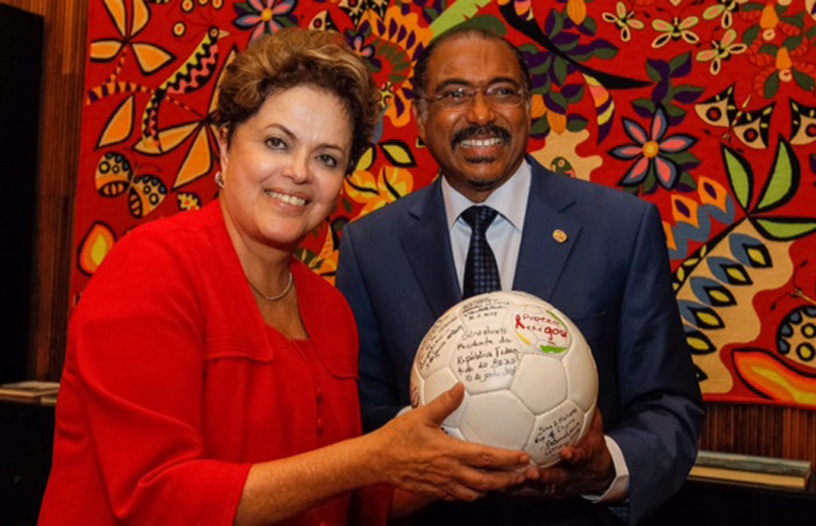
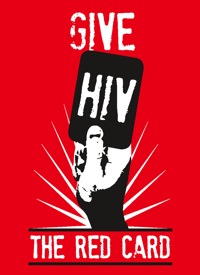
 At the Africa Cup of Nations in January 2013, UNAIDS presented their “Protect the Goal” Campaign, with goals of both preventing and raising awareness of HIV. HIV prevention information was posted on screens in the stadiums and prominent players backed the campaign by reading statements of support for this campaign before each game as they stood before their fans. With thousands of fans who look up to these teams and players, the campaign had a radically successful start [1]. A year and a half later, Protect the Goal has come to Brazil for the 2014 FIFA World Cup. Now backed by the President of Brazil, [2] Protect the Goal has been able to make an even greater impact, especially by offering free HIV tests to fans in Brazilian host cities. Renowned players like David Luiz are also joining the campaign and calling on their thousands of fans to join them in stopping the spread of HIV and stigma [3].
 Another organization, Grassroots Soccer, has taken a different approach to using soccer as a means of reducing HIV. They have built and refined a curriculum called “Skillz”, a new approach that uses soccer exercises to help kids learn about HIV risks and prevention.  For example, in one of their activities, called “Risk Field,” “participants dribble a soccer ball in between cones representing HIV-related risks—multiple partners, drug/alcohol abuse, sugar daddies, etc. If one player hits a cone, he and his teammates must complete 3 pushups, showing how the consequences of one person’s risk can not only affect him, but also his friends, family, and community" [4]. This is a revolutionary new way of educating kids, and allows the participants to feel more engaged in what they are learning.
Grassroots Soccer is using methods  that have proven results. One study in Zimbabwe found that, among many other encouraging statistics, students participating in the program who knew where to go for problems related to HIV increased dramatically, from 47% to 76% [5]. Like the Protect the Goal campaign, Grassroots Soccer is backed by a number of well-known players, such as AlexSong, Oguchi Onyewu, Christen Press, and more, [6] and is therefore able to reach a wide audience of fans that look up to and respect these players.


As evident by the campaigns and programs above, it is undeniable that sports have a great influence and can be used to unite and educate groups of people. Nelson Mandela said it best, “Sport has the power to change the world. It has the power to inspire. It has the power to unite people in a way that little else does. It speaks to youth in a language they understand. Sport can create hope where once there was only despair.” Soccer is more than just a game; it’s a powerful tool that can bring motivation, solutions, and hope to people around the world working to end HIV and the associated stigma and discrimination.


References:


Tuesday, June 3, 2014

Orange, Fuzzy, Feisty, and HIV-Positive: Meet Kami

By: Adriana Ganci

Since its premiere on public television in 1969, Sesame Street has been a keystone program in teaching children about diversity and acceptance. The show has historically depicted people of different ethnicities, nationalities, religions and abilities. Sesame Street is, in fact, where many children begin their educational journeys. Big Bird and Elmo are household names. But how many Americans have heard of the Muppet, Kami? Chances are, not many. But everyone should.

Kami is a character who originated on South Africa’s Takalani Sesame in 2002. She has a feisty spirit and loves the outdoors and playing soccer. She is also HIV-positive. In a country where 5.5 million people are living with HIV, the social impact of this issue on children is not one that can be ignored. Because the show is aimed at little tykes aged three-seven, the goal of this programming is not to teach about the importance of protected sex or about the dangers of sharing intravenous needles. The goal, instead, is to portray the life of Kami in a way that resembles the lives of hundreds of thousands of children in South Africa – the life of a child who loves to have fun, the life of a child who lives with HIV, and the life of a child whose parent died as a result of having AIDS. For too long there has been a culture of stigma and silence regarding this globally pervasive issue. Kami seeks to reduce this HIV-related stigma by exposing children to a friendly, likeable, and relatable character from a very young age.

How exactly does Kami work to fight against stigma? She loves playing the train game where everyone holds each other’s shoulders and pretends they are a train. In sharing this game – which, of course, involves physically touching your friends – Kami teaches us that playing games and giving hugs and high fives cannot transfer HIV. Kami also has a memory box that her mother left her before she passed away, filled with happy mementos like pictures of the two of them and her mom’s favorite scarf. Grieving is a very important process for children who lose parents, and Kami teaches us that, while the process is very difficult, evoking happy memories is a very good way to cope. When Kami isn’t singing about keeping the earth clean or kicking a soccer ball around, she is talking with the likes of Archbishop Desmond Tutu and Former President Bill Clinton, and thanking them for the work they’ve done for children like herself living with HIV. Both men have told Kami that she is the real hero. Kami’s accolade doesn’t end there – UNICEF also named Kami a “Champion of Children” in 2003. [1]

Kami was created by Sesame Workshop, the nonprofit organization behind the 45 years of work that Sesame Street has done to acknowledge key critical educational needs in the now 150 countries in which the show airs. [2] Sesame Workshop brings in experts to consult on creative ways to relay these important lessons to children. Projects by Sesame Workshop include an entire array of academic, social and emotional topics: they run the gamut from introducing a Muppet whose father is in prison to airing episodes discussing the importance of improving the education of girls worldwide.


Each project includes extensive post-production research on the actual educational impacts of the programs. Through this research, Sesame Workshop discovered that parents who have seen Kami on television are twice as likely to talk to their children about HIV and AIDS than parents who do not know Kami. Sesame Workshop has also concluded that since the introduction of Kami into the cast, children exposed to Takalani Sesame have demonstrated measurable increases in their knowledge of HIV, de-stigmatization of HIV, and the ability to cope with illness. [3] Due to Kami’s success in South Africa, producers who were creating Nigeria’s Sesame Square decided to also use Kami with the show’s launch in 2010.With nearly 278,000 children in Nigeria living with HIV, there was a need for a character like Kami. Bearing in mind that only about a quarter of Nigerian households have a television, the show’s creators have also created a campaign that extends to radio, cell phones, publications and school materials. [4]

When a person is able to closely identify with something like HIV they are generally able to understand it better. It also makes good sense that we, as humans, are less fearful, and thus less stigmatizing, of things we clearly understand.  Thus, using someone who is vibrant, young, and fun-loving like Kami to introduce the subject of HIV to children of a young age helps to reinforce the idea that those living with HIV are people just like those not living with HIV. Aiming these lessons at children will help South Africa and Nigeria to end the culture of silence and stigma surrounding HIV which, in turn, has the potential to lower the infection rates in those countries. Kami has the potential to help the next generation of South African children become the most accepting generation yet. This is fitting since “Kami” is the Setswana word for “acceptance”.

When Kami joined Takalani Sesame in 2002, some conservative legislators in the U.S. sent a letter to PBS stating that if PBS were to utilize the HIV-positive character in the American show, their funding would be threatened. [5] American children have come to love Muppets who are in wheelchairs, Muppets who are blind, Muppets who are different colors and those that practice different faiths. Hiding the idea of HIV from children will only continue to feed ignorance and fear and encourage stigma towards those living with HIV for years to come. There is no reason that American children would not come to adore Kami, just as others did in South Africa and Nigeria. With a name that literally means “acceptance”, it sounds like it is definitely time to make Kami a household American name.

1.  http://www.unicef.org/media/media_16631.htm
2. http://www.sesameworkshop.org/what-we-do/our-research-model/
3. http://www.sesameworkshop.org/what-we-do/our-research-model/
4. http://www.cnn.com/2010/SHOWBIZ/TV/10/06/sesame.street.nigeria/
5. http://www.queerty.com/could-hiv-muppet-kami-ever-move-into-americas-sesame-street-20100104


Friday, January 24, 2014

An Open Letter to Africa's Leaders - Joachim Chissano, former president of Mozambique

H. E. Joaquim Chissano is the former President of Mozambique and current co-chair of the High-Level Task Force for the ICPD (International Conference on Population and Development)

Read the original post in its entirety here, at The Africa Report: http://www.theafricareport.com/Soapbox/an-open-letter-to-africas-leaders-joaquim-chissano-former-president-of-mozambique.html

This is a transformative moment for Africa – and indeed, for the world.


Decision-makers from across the continent, under the able leadership of Liberian President, Ellen Johnson Sirleaf, are finalising a crucial document outlining a common position for Africa on the development agenda that will replace the Millennium Development Goals after 2015.

It is a strategy that has empowered us in many ways. And it means that our voices will be heard when the framework that will guide governments, donors and development partners for years to come is negotiated. So we need to be careful what we ask for.

Since the 1990s, Africa has gained considerable strength in international negotiations by sticking together and forging consensus on important issues.


I urge our leaders to draw from the lessons of the past, but also to heed current realities. And to look ahead to what the future is calling forth – because this new development agenda will affect the lives of millions of our people at a very critical time for Africa.

I encourage leaders to take a strong stand for fundamental human rights, and advance the trajectory for basic freedoms.

This means pushing for three priorities that lie at the heart of sustainable development: the empowerment of women and gender equality; the rights and empowerment of adolescents and youth; and the sexual and reproductive health and rights of all people.

These interlinked priorities and their policy implications have been carefully analysed by the High-Level Task Force for the ICPD that I co-chair.

We have found that they represent not only human rights imperatives, but smart, cost-effective investments to foster more equitable, healthy, productive, prosperous and inclusive societies, and a more sustainable world.

Sexual and reproductive health and rights, in particular, are a prerequisite for empowering women and the generations of young people on whom our future depends.

This simply means granting every one the freedom – and the means -- to make informed decisions about very basic aspects of one's life – one's sexuality, health, and if, when and with whom to have relationships, marry or have children – without any form of discrimination, coercion or violence.

This also implies convenient, affordable access to quality information and services and to comprehensive sexuality education.

We can no longer afford to discriminate against people on the basis of age, sex, ethnicity, migrant status, sexual orientation and gender identity, or any other basis – we need to unleash the full potential of everyone.
As an African who has been around a long time, I understand the resistance to these ideas.

But I can also step back and see that the larger course of human history, especially of the past century or so, is one of expanding human rights and freedoms.

African leaders should be at the helm of this, and not hold back. Not at this critical moment.

The international agenda that we will help forge is not just for us here and now, but for the next generations and for the world.

As I think about these issues, I am reminded of the words of our recently departed leader, who gained so much wisdom over the course of his long walk to freedom.

"To be free is not merely to cast off one's chains," Nelson Mandela reminded us, "but to live in a way that respects and enhances the freedom of others."
Let us live up to his immortal words.

• H. E. Joaquim Chissano is the former President of Mozambique and current co-chair of the High-Level Task Force for the ICPD (International Conference on Population and Development)

Read the original post in its entirety here, at The Africa Report: http://www.theafricareport.com/Soapbox/an-open-letter-to-africas-leaders-joaquim-chissano-former-president-of-mozambique.html