Showing posts with label hope. Show all posts

Thursday, June 26, 2014

Soccer: More Than Just a Game

By Anna Charles

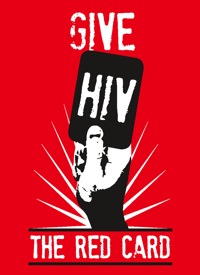
At this time of year, soccer fans (or football fans, depending on where you are from)  around the world are turning their minds and their televisions to the 2014 FIFA World Cup. With millions across the globe tuning in to cheer for their favorite teams, many international health organizations are tapping into this soccer fanaticism, and employing soccer as an innovative medium to talk about HIV.  Soccer is one of, if not the most popular sport in the world, and groups such as UNAIDS and Grassroots Soccer are using the excitement around this sport to reach out to youth and to facilitate programs to educate them about HIV prevention and stigma reduction.
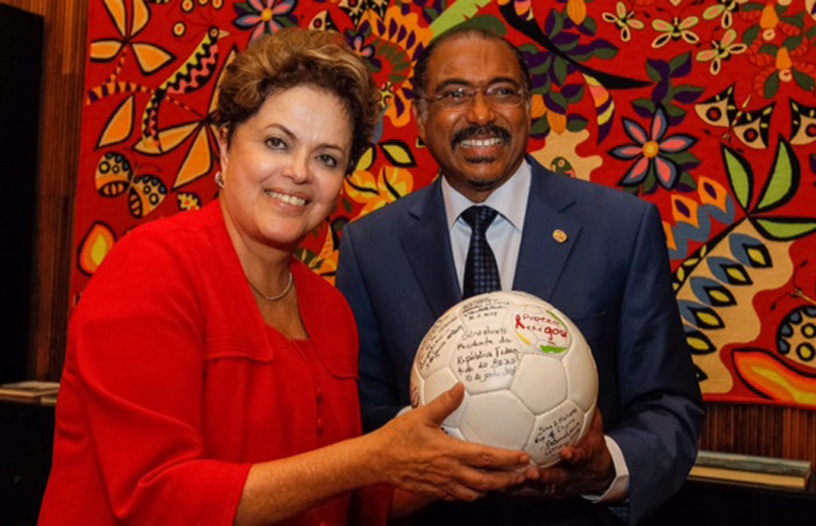
 At the Africa Cup of Nations in January 2013, UNAIDS presented their “Protect the Goal” Campaign, with goals of both preventing and raising awareness of HIV. HIV prevention information was posted on screens in the stadiums and prominent players backed the campaign by reading statements of support for this campaign before each game as they stood before their fans. With thousands of fans who look up to these teams and players, the campaign had a radically successful start [1]. A year and a half later, Protect the Goal has come to Brazil for the 2014 FIFA World Cup. Now backed by the President of Brazil, [2] Protect the Goal has been able to make an even greater impact, especially by offering free HIV tests to fans in Brazilian host cities. Renowned players like David Luiz are also joining the campaign and calling on their thousands of fans to join them in stopping the spread of HIV and stigma [3].
 Another organization, Grassroots Soccer, has taken a different approach to using soccer as a means of reducing HIV. They have built and refined a curriculum called “Skillz”, a new approach that uses soccer exercises to help kids learn about HIV risks and prevention.  For example, in one of their activities, called “Risk Field,” “participants dribble a soccer ball in between cones representing HIV-related risks—multiple partners, drug/alcohol abuse, sugar daddies, etc. If one player hits a cone, he and his teammates must complete 3 pushups, showing how the consequences of one person’s risk can not only affect him, but also his friends, family, and community" [4]. This is a revolutionary new way of educating kids, and allows the participants to feel more engaged in what they are learning.
Grassroots Soccer is using methods  that have proven results. One study in Zimbabwe found that, among many other encouraging statistics, students participating in the program who knew where to go for problems related to HIV increased dramatically, from 47% to 76% [5]. Like the Protect the Goal campaign, Grassroots Soccer is backed by a number of well-known players, such as AlexSong, Oguchi Onyewu, Christen Press, and more, [6] and is therefore able to reach a wide audience of fans that look up to and respect these players.


As evident by the campaigns and programs above, it is undeniable that sports have a great influence and can be used to unite and educate groups of people. Nelson Mandela said it best, “Sport has the power to change the world. It has the power to inspire. It has the power to unite people in a way that little else does. It speaks to youth in a language they understand. Sport can create hope where once there was only despair.” Soccer is more than just a game; it’s a powerful tool that can bring motivation, solutions, and hope to people around the world working to end HIV and the associated stigma and discrimination.


References:


Saturday, September 21, 2013

A Day with HIV: Walking the Walk

Maybe sometimes you wonder who I am—the person who manages much of the Stigma Action Network’s (SAN’s) social media—my name is Kirsty, and I have been the Stigma, Discrimination, and Gender Intern at the International Center for Research on Women since February 2013. Every weekday, I come to work and I sit in a cubicle where I pour over the latest in HIV and stigma, distilling that information down to posts that I think you—our SAN users—will find digestible and interesting. I learn a lot about HIV and stigma from writing these posts and from engaging with the SAN’s incredible community of #StigmaWarriors (like you!). However, I have never been so humbled by or able to empathize quite so much with this cause as when I “walked the walk” of a #StigmaWarrior—the day I went in to take my very own HIV test. 

One day shortly after I started this internship, as I was perusing my SAN newsfeed I saw that Whitman Walker would be conducting free HIV tests at my university. While I shared information about HIV testing on Facebook and Twitter,  encouraging people in the DC area to take advantage of this free and quick testing opportunity, before this moment I had never been tested for HIV or even thought about getting tested, as I had little reason to think I would be HIV positive. As soon as I shared this post I was struck by an awful sense of hypocrisy: I sit here, every day in this cubicle and encourage people to get tested, to be greater than HIV, to be greater than stigma, and I have never even been tested. I immediately grabbed my phone and set a reminder to attend the testing event on campus, determined to practice what I preach.

The day the mobile clinic was on campus, I was speaking at one of the Nursing and Health Studies School’s (NHS) events for Georgetown’s Accepted Student Weekend in a building across from where the mobile clinic was parked.  After the event, I calmly headed to the mobile truck, but as I neared, I saw one of my professors and my body went into a panicked autopilot, causing me to walk straight past the truck. I did a lap around the quad, shaking off my embarrassment and riling myself up to try again. This time, out of the corner of my eye, I saw one of the parents who had been talking to me after the NHS event; again I walked right by the clinic, completely overwhelmed with a mixture of fear and unwarranted, shame. This happened two more times. On the fourth, I walked 15 feet away from the truck and stopped to collect myself. 

If I ever needed a moment to personally reaffirm why it is so important to reduce the stigma surrounding HIV, this was it. I’m normally a very self-assured person, but the reality of (what turned out to be very publicly)  getting an HIV test shattered almost every shred of confidence I possessed. As I was standing 15 feet away from this clinic, trying to be inconspicuous by pretending to stare at my phone, I started to feel annoyed with the situation. I did not like feeling so afraid of being judged, especially for taking part in an activity which should be part of a person’s annual health routine. I knew what I was doing was the responsible thing to do—so who has the right to make me feel ashamed? If anyone chooses to discriminate against me for taking the test, at the end of the day that is their problem and shouldn’t be mine. 

After what I can only describe as a very fervent internal pep-talk, I turned around and briskly walked to the first volunteer and rapidly blurted out: “HiI’veneverhadanHIVtestandIwanttogetone” I didn’t want to give myself another chance to walk away. They directed me into the truck, where I nervously babbled to the volunteer as she handed me a few pages of paperwork and the HIV test that I simply had to brush along the inside of my mouth. 

After taking the test, I was nearly floored when the volunteer told me I would have to leave the truck it had taken so much out of me to enter, and then come back for my results in 30 minutes. I went to grab an iced tea to cool my nerves and kill time before I had to get my results. During this time, that nasty little part of your brain that plays devil’s advocate started to get the better of me. What if the results were positive? What would my parents think? Would my friends be supportive? My boyfriend would probably dump me before I finished telling him. 

A half hour of agonizing and “what if-ing” later, I was relieved to find out that my results were negative. But the sense of unease I had been experiencing for the past hour persisted as I reflected on my experience.

Perceiving stigma and discrimination from practical strangers and then contemplating with so much uncertainty who, if anyone, would be there to support you if those results were positive… that shouldn’t happen to anyone…ever. This experience allowed me to emphasize and truly understand just how important the work of organizations, like the SAN, to reduce HIV stigma is. 

If we want to arrive a world free of such stigma, we all must do our part. We must iterate and reiterate the message that taking charge of your health—by using protection, getting tested, or seeking treatment—is something to be proud about, not ashamed of. Showing empathy and support to all people in the global fight against HIV (even through such actions as making STD/HIV testing a routine part of your life) is a critical component to ending HIV-related stigma and discrimination


I am very proud to say I left my cubicle, and I “walked the walk”. I encourage you all to do the same and take your own steps against HIV stigma. I know I will continue to take my own.

________________________

September 21st is the "A Day with HIV" Awareness event! Take a step against stigma and send a photo to photos@adaywithhiv.com! For more details about this event click here.

Be sure to visit the SAN social media pages to see how we are taking part!

Thursday, July 18, 2013

Why do people suffer for being who they are?

A guest blog by Helena Sunday Candy NangombeNamibia      

Life is a gift freely given. I think we all have to enjoy our life in our own way and in doing so discover ways of making ourselves happy. Although we got it free, this does not mean that we are the same because I am me and you are you. So I do not understand why many people suffer for who they are in this world because of being gay, lesbian, or openly living with HIV. It does not mean that you have to be like a person to support them, but you have to support others because of the LOVE you have for them and you must show it. We all know that gay, lesbian, disabled and people living with HIV are our brothers, sisters, mothers, fathers, daughters, sons and people around our community. We have to show LOVE and CARE to them. If you do not do that then who do you expect will do the same on your behalf?

It’s our own people that we are stoning to death. What is the use of hating and beating up gay and lesbian people? When we talk of rights for all, where are the rights for them? Where and when are they protected? They can’t walk freely in their own home town. People call them so many bad names. Here I call it time wasting because even in Africa where people believe that this not a place for gay and lesbian people, they are here and they will be here because they are from here and they have feelings like you and me.

 It’s still hard because inside your house you are somebody else and when you are with people who really understand you, and then you are somebody else again. It’s simply called feelings- why can’t they be allowed to fall for whomever they want when they are just human being like anyone else? Why do they even have to fight for this in the first place? Our friends, brothers and sisters are homeless now because their family disowned them for being who they are and for not hiding their feelings. I have a child and I am not the master of his destination or happiness. I will love him always as his mother no matter what he might be. 

I see us going nowhere with this much stigma and discrimination among us. Instead of us being part of the solution, we are part of creating more problems. Young people, do you see yourself achieving anything? I know that we are the future and leaders of today so let’s fight stigma and discrimination. You are committing no crime by loving and respecting those people for who they are. The best medication of people living with HIV is to be stress free and have support, love and care from people around them. Even in this world when ARV treatment is helping people living with HIV to be so well, the discrimination is still there. Wake up world, we are not dying of HIV like in past years when there was no ARV treatment. Things are much better now so let’s just work on addressing stigma and discrimination because we will get nowhere as long as people living with HIV continues to be mistreated and stigmatized.  


In conclusion, I am young, tall, and I have all that can make a woman beautiful. I do not care if people think I am gay, lesbian, or have HIV. What I care about is fighting for everyone’s rights and to see that my efforts mean something to every person. If I have to walk naked for people to hear me, then I will do it. I am here fighting for the right of people living with HIV and the right for all. In all my stories, I like to say young people, let’s hold hands together and walk together as one. I am nothing without you but with you I will achieve a lot. I need you and you need me. I love posting because this is the only way I can talk to many of you- to anyone who is reading this and might be going through some difficult times. Now, I want you to know that you are not all alone because you have me as a friend and sister and many other people around the world. If you find yourself down, please pick yourself up and stand tall because I know you can do it no matter how hard it can be. Live your life like there is no tomorrow and be happy always. I have to love and leave you now until next time.