
Showing posts with label Global. Show all posts
Showing posts with label Global. Show all posts
Monday, December 1, 2014
Violence and HIV/AIDS: Many Women Experience a Double Burden
This summary is not available. Please
click here to view the post.

Thursday, June 26, 2014
Soccer: More Than Just a Game
By Anna Charles
At this time of year, soccer fans
(or football fans, depending on where you are from) around the world are turning their minds and
their televisions to the 2014 FIFA World Cup. With millions across the globe tuning in to cheer for their favorite teams, many international health organizations are
tapping into this soccer fanaticism, and employing soccer as an innovative
medium to talk about HIV. Soccer is one of, if not the most popular
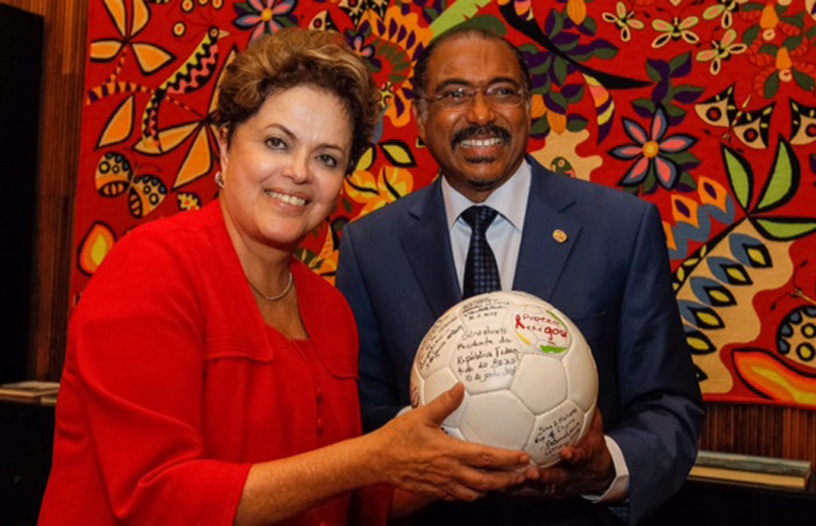
sport in the world, and groups such as UNAIDS and Grassroots Soccer are using
the excitement around this sport to reach out to youth and to facilitate programs
to educate them about HIV prevention and stigma reduction.
 Another organization, Grassroots
Soccer, has taken a different approach to using soccer as a means of reducing
HIV. They have built and refined a curriculum called “Skillz”, a new
approach that uses soccer exercises to help kids learn about HIV risks and
prevention. For example, in one of their
activities, called “Risk Field,” “participants dribble a soccer ball in between
cones representing HIV-related risks—multiple partners, drug/alcohol abuse,
sugar daddies, etc. If one player hits a cone, he and his teammates must
complete 3 pushups, showing how the consequences of one person’s risk can not
only affect him, but also his friends, family, and community" [4]. This is a revolutionary new way of educating kids, and allows the participants to feel more engaged in what they are learning.
Another organization, Grassroots
Soccer, has taken a different approach to using soccer as a means of reducing
HIV. They have built and refined a curriculum called “Skillz”, a new
approach that uses soccer exercises to help kids learn about HIV risks and
prevention. For example, in one of their
activities, called “Risk Field,” “participants dribble a soccer ball in between
cones representing HIV-related risks—multiple partners, drug/alcohol abuse,
sugar daddies, etc. If one player hits a cone, he and his teammates must
complete 3 pushups, showing how the consequences of one person’s risk can not
only affect him, but also his friends, family, and community" [4]. This is a revolutionary new way of educating kids, and allows the participants to feel more engaged in what they are learning.
Grassroots Soccer is using methods that have proven results. One
study in Zimbabwe found that, among many other encouraging statistics, students
participating in the program who knew where to go for problems related to HIV
increased dramatically, from 47% to 76% [5]. Like the Protect the Goal campaign,
Grassroots Soccer is backed by a number of well-known players, such as AlexSong, Oguchi Onyewu, Christen Press, and more, [6] and is therefore able to reach a wide audience of fans that look up to and respect these players.

References:
2.http://www.unaids.org/en/resources/presscentre/featurestories/2014/june/20140611ptgbrazilpresident/
Wednesday, May 21, 2014
New HIV Bill in Uganda Will Harm Women, Children, and Families
Last week, the Government of Uganda took a major step back in the fight against HIV.
The bill, entitled “HIV Prevention and AIDS Control Bill,” that President Yoweri Museveni is being asked to sign into law, criminalizes the transmission of HIV, makes it legal for doctors to disclose their patients’ HIV status to partners and families without consent, and, last but not least, calls for mandatory testing for pregnant women and their partners.
This new law would be a major step backward for a country that, for 30 years, has been a leader in tackling HIV head on. Ten years ago, I chose to do my dissertation research in Uganda because the country was on the forefront of using innovative, human-rights based approaches to combat the spread of HIV and to ensure that those living with HIV could lead full lives. Uganda was a veritable hotbed of innovative approaches to HIV prevention, care and treatment. Home-based HIV care and treatment, couples counseling, and positive prevention all emerged from Uganda and are now being implemented in countries around the world. Strong leadership and involvement of people living with HIV was a hallmark of these efforts.
But the news from Uganda marks a radical shift. Rather than exploring new ways to combat HIV and empower individuals, the bill stigmatizes and alienates people living with HIV and those who may be living with HIV. Instead of ramping up efforts to engage women in antenatal services to ‘get to zero’ new infant infections by 2015, a global goal set forward by UNAIDS in 2013, the bill infringes on women’s rights and will almost certainly lead to large reductions in the number of women attending antenatal care if enacted.
Such a back slide is worrying, in a country where 6.1% of pregnant women are living with HIV. In order to prevent transmission of HIV from mother to child (PMTCT), pregnant women must engage in what health officials call a ‘cascade’ of services, beginning with an HIV test.
Currently, about two-thirds of pregnant women test for HIV in Uganda. The next step for women who test positive is to begin taking antiretroviral therapy (ART). In Uganda, about 50% of pregnant women living with HIV receive ART. At birth, babies born to mothers living with HIV should receive oral Nevirapine followed by a 6-month course of antiretroviral prophylaxis. In Uganda, only 22% of infants born to mothers living with HIV receive antiretroviral prophylaxis. Stigma, or the fear of experiencing stigma, is one of the key challenges to improving the coverage of these critical PMTCT services.
Globally, stigma and discrimination have been revealed as among the most important barriers to pregnant women's acceptance of HIV testing during antenatal care, enrollment in PMTCT, and retention and adherence in these programs, all of which are critical to reducing transmission. Indeed, it has been estimated that more than half of vertical transmissions in some settings can be attributed to the cumulative effect of stigma at each point of the cascade. The new law in Uganda will only serve to fuel stigma and discrimination.
While getting all pregnant women to test for HIV is a good thing, making testing mandatory is not the way to go about it. Rather than increasing HIV testing, mandatory testing has been shown to lead some women to avoiding attending antenatal care altogether. As the PMTCT cascade of services is often only accessible through antenatal clinics, any policy that reduces clinic attendance is liable to increase the number of infants born with HIV. Coupling mandatory testing and criminalization is a double whammy, as those who test positive could face prosecution from partners who claim they were willfully infected. Adding the further injustice of dismantling provider confidentiality is the final nail in the coffin, both metaphorically and realistically. Under these circumstances, why would any Ugandan woman attend an antenatal clinic?
According to our friends at the International Community of Women Living with HIV,
“Women…will shy away from medical services, negatively impacting antenatal care attendance. The devastating result of this will be that more children are at risk of being infected through vertical transmission. Currently, by using proven strategies that emphasize voluntary counseling and testing, Uganda is striving toward zero infections from mother to child. However, Uganda’s gains could be lost if women are forced to test every time they visit a health facility.”
The truth is that throughout Uganda, women are already getting tested. Current testing approaches, including home-based testing and provider-initiated, or ‘opt-out’, testing have greatly increased HIV testing in Uganda over the last decade. This new legislation just serves as yet another repressive measure, targeted at women, but ultimately affecting men and entire families, to stigmatize anyone living with HIV.
The global community cannot stand-by and watch the erosion of decades of progress in reducing HIV transmission and in making sure that those living with HIV are able to receive quality care free from discrimination. We must not be complacent. The lives of thousands of mothers and children in Uganda hang in the balance.
So what can we do? Advocates, policy makers and researchers alike must urge President Museveni to weigh the risk of the reversals that could result from criminalization and mandatory testing under this legislation, in contrast to the tremendous gains Uganda has made from the policy of positive-living and a human rights-based approach to HIV prevention and management. Should the law be signed, we must not give up, but rather continue to urge the Government of Uganda to use all appropriate means to reconsider it, including during the development of regulations for its implementation by the Minister of Health. And lastly, we must encourage the Government of Uganda to once again be a leader in the global response to HIV by championing evidence-based, inclusive and supportive HIV policies instead of policies driven by fear and stigma.
Friday, March 28, 2014
The Hidden Epidemic: HIV/AIDS in Eastern Europe and Central Asia, Part 1
When HIV is discussed at the international level, let’s face
it, most people think of Africa and Southeast Asia as the regions where HIV is
spreading most rapidly. That is where most media, celebrity, and NGO attention
is focused with regards to prevention and education. However, HIV/AIDS is
spreading most rapidly in Eastern Europe and Central Asia [1]
 To put this in context: between 2001 and 2011, the
prevalence of HIV in Eastern Europe and Central Asia increased by 250%; during
that same time period, prevalence fell by 0.8% in Africa and stabilized at 0.3%
in Southeast Asia [2]. Yet despite this
reality, the spread of HIV in this region receives little to no media coverage
both domestically or internationally.
To put this in context: between 2001 and 2011, the
prevalence of HIV in Eastern Europe and Central Asia increased by 250%; during
that same time period, prevalence fell by 0.8% in Africa and stabilized at 0.3%
in Southeast Asia [2]. Yet despite this
reality, the spread of HIV in this region receives little to no media coverage
both domestically or internationally.
Due to the limited awareness and coverage on this, the SAN
will be showcasing a blog series discussing the effects of stigma in Central
and Eastern Europe, and what the world can do to make this problem better
known. This first part of the series will serve to give you, our
#StigmaWarriors, some background on the stats, policies, and social environment
of Eastern Europe and Central Asia.
Knowing the Numbers

Approximately 1.4 million people (1% of the population) in
Eastern Europe and Central Asia are living with HIV [3]. However, this is an
estimate based on the current number of people who have been officially
diagnosed with HIV. In reality the number may actually be higher due to
underreporting, a direct result of stigma and discrimination people may
experience around HIV testing and disclosure.
The countries with the largest populations of people living
with HIV are Estonia, Russia, and Ukraine. Currently, Russia and Ukraine account
for 90% of new cases each year in this region [4]. Below we have included a table
of the HIV prevalence among adults in each country in this region.
HIV Prevalence in
Eastern Europe and Central Asia:
Country
|
# of adults living with HIV
|
Prevalence
|
Estonia
|
9,900
|
1.3%
|
Russia
|
980,000
|
1.1%
|
Ukraine
|
350,000
|
0.8%
|
Latvia
|
10,000
|
0.7%
|
Belarus
|
13,000
|
0.4%
|
Kyrgyzstan
|
4,200
|
0.4%
|
Romania
|
15,000
|
0.3%
|
Tajikistan
|
10,000
|
0.3%
|
Armenia
|
3,500
|
0.2%
|
Georgia
|
2,700
|
0.2%
|
Kazakhstan
|
12,000
|
0.2%
|
Azerbaijan
|
7,800
|
0.1%
|
Bulgaria
|
3,800
|
0.1%
|
Hungary
|
3,300
|
0.1%
|
Lithuania
|
2,200
|
0.1%
|
Poland
|
20,000
|
0.1%
|
Turkmenistan
|
200
|
0.1%
|
Uzbekistan
|
16,000
|
0.1%
|
Source: [5]
 In Eastern Europe and Central Asia, HIV/AIDS is currently
concentrated, but not limited, among drug users and sex workers and their
partners. Other populations affected are prisoners, MSM, and children who have
parents living with HIV, but their numbers are small compared to the number of
sex workers and drug users affected.
In Eastern Europe and Central Asia, HIV/AIDS is currently
concentrated, but not limited, among drug users and sex workers and their
partners. Other populations affected are prisoners, MSM, and children who have
parents living with HIV, but their numbers are small compared to the number of
sex workers and drug users affected. Among drug users, approximately 20% are living with HIV, though the number could be even higher [6]. Furthermore one-quarter of the world’s injecting drug users live in Eastern Europe and Central Asia, and approximately 80% of new HIV cases are transmitted via injecting drug use [7]! Among sex workers, 11% of this population are living with HIV [8]. It is even higher for sex workers who inject drugs; 43% for Ukrainian sex workers who inject drugs, compared to 8.5% for those who do not [9]. Lack of knowledge about the spread of HIV is a leading cause of high HIV prevalence among these groups. Only 8% of sex workers in Georgia know how HIV is spread, compared to 29% in Moldova and 36% in Uzbekistan [10]. It is also believed that the spread of HIV has been allowed to escalate due to very little funds targeting drug users, sex workers, and MSM, This is confirmed by UNAIDS Regional Program Adviser Roman Gailevich, who stated: "Governments everywhere are reluctant to spend money on sex workers, on drug users, but MSM comes at the top of the reluctance list. It is probably the last programs that the governments will start." [11]
Policy and Social
Issues
Given the aforementioned statistics, it should come as no
surprise that currently in Eastern Europe and Central Asia, HIV/AIDS is met
with secrecy and derision , and HIV-related stigmas discourage testing and
treatment – even at the policy level. Let consider the policies in Russia, for
example. The Russian government does not allow harm reduction policies, such as
needle-sharing programs because they claim it would threaten drug prevention programs
by encouraging people to use injectable drugs [12]. Additionally, HIV treatment
centers are separated from the rest of the medical community [13]. This is
particularly troubling, not only because it inhibits individuals from receiving
treatment, but as a result of the new gay propaganda laws, the threat of
violence, social alienation, and arrest this has amplified individual’s
concerns of being seen entering a HIV clinic and being perceived as gay.
These policies inform people’s perspectives on HIV and fuel stigma.
Stigma is so prevalent that many of those who know their HIV status state that
they do not fear dying as much as they fear the stigma associated with HIV [14]. The
ugly reality for people living with HIV in this region, though it is applicable
in other settings, is that they are more likely to be discriminated against
when looking for employment, and there is a lack of confidential legal avenues
for people living with HIV could to use to prevent such discrimination. As one
man living with HIV in Georgia said:

"I know beforehand my status will certainly hinder the
chance to get job or to be promoted… I do not search for a job as I think they
will have a negative attitude towards me." [15]
Not even children are protected from HIV stigma. About 75%
of parents of schoolchildren stated they would remove their child from school
if they found out there was a child living with HIV attending the school [16], and
one schoolteacher remarked:
“Yes they [people
living with HIV] are really dangerous. I think that such children [living with
HIV] should not attend neither schools nor kindergarten as the other children
will be safe”. [17]
Consequently, many children are forced to hide their status,
until they are out-ed vis-à-vis a stamp on their national IDs that all people
living with HIV are forced to carry [18].
This leads to much internalized shame and stigma, and
explains why HIV is growing so rapidly in-country.
Until Next Time…
It is clear that there is a long way to go before the stigma
facing people living with HIV in Eastern Europe and Central Asia is gone. The
quality of life for those living with HIV is highly unstable, due to stigma and
poor quality of medical care. This is a setback to the prevention of HIV, and
to the quality of life for such individuals.
- What do you think about this issue?
- Why do you think HIV/AIDS in Eastern Europe/Central Asia hasn't been discussed much in the media?
- What do you think can be done to bring more attention to this?
Be sure to look out for our next post, where we will be
discussing inter-country programs, and the various successes and failures of
individual countries in implementing HIV prevention, treatment, and anti-stigma
programs.
Friday, March 7, 2014
5 Female #StigmaWarriors who will inspire
For those of you not in the know, Saturday the 8th is InternationalWomen’s Day, and Monday the 10th is National Women’s and Girl’s HIV/AIDSAwareness Day! All week long we have been participating in these awareness
days and today we are celebrating some INCREDIBLE women who are
living with HIV and fighting against stigma every day. We have highlighted five
amazing female #StigmaWarriors-- though there are so many to choose from!!!
Below please find a profile of each of these female #StigmaWarriors and the
ways they work to stop stigma.
We hope they will inspire you – as they inspire us every day - to join them in stopping stigma!
We hope they will inspire you – as they inspire us every day - to join them in stopping stigma!
____________

Paige Rawl is a young HIV activist who was diagnosed at the
age of two. When Paige was in the sixth grade, she confided to her best friend
that she was HIV-positive, and within two weeks, the entire school knew that she
was living with HIV. Because students didn’t understand what living with HIV
meant, Paige was bullied so much she was forced to leave school.

When Paige entered the ninth grade, she decided to turn her
negative experiences into positive lessons.
At the age of fourteen she received certification by the American RedCross and became an HIV/AIDS educator. She is the youngest person who has ever
received this type of certification from the Red Cross. Paige began traveling
the country speaking at schools about living with HIV. She has also worked with such programs as the Indianapolis Urban League "to encourage young adults to take control of their sexual health and fight back against bullying" [1]. She even helped pass
anti-bullying legislation in her home state of Indiana. Because of this extraordinary
activism Paige was nominated for Seventeen Magazine’s ‘Pretty Amazing’ contestand finished in the top five.
Paige currently attends Ball State University where she is
studying for a degree in Molecular Biology and hopes to become an HIV/AIDS
researcher, and plans to continue to use her inspiring story to fight HIV
stigma.

- Oprah
- 20/20
- Good Morning America
- “A Conversation with Magic Johnson” on Nickelodeon.
Ebony Magazine named Hydeia one of
the Most Influential 150 African Americans in 2008 and 2011. She has also
been honored by the American Red Cross and received an Essence Award in 1999.
With her high pitched voice and sweet braids, Hydeia
captured the hearts of the nation with ten words: “I just want people to know that [people living with HIV] are normal
people.” [2] She is the little girl with AIDS who grew up, and at a time when
HIV was severely misunderstood she put a human face on the condition. Hydeia
continues to fight stigma through speaking engagements.
 Elizabeth contracted
HIV through medical malpractice and unknowingly passed the virus to her
children, Ariel and Jake. Neither Ariel nor Jake could be treated because there
were no antiretroviral medications approved to treat children at the time, and
doctors did not believe that HIV/AIDS was prevalent among children. After
Ariel’s death in 1988, and her fear that Jake would die shortly after, Elizabeth
founded the Elizabeth Glaser Pediatric AIDS Foundation in order to bring hope to children living with HIV/AIDS. It
spurred federal funding to study mother-to-child transmission and to produce antiretroviral medication for children.
Elizabeth contracted
HIV through medical malpractice and unknowingly passed the virus to her
children, Ariel and Jake. Neither Ariel nor Jake could be treated because there
were no antiretroviral medications approved to treat children at the time, and
doctors did not believe that HIV/AIDS was prevalent among children. After
Ariel’s death in 1988, and her fear that Jake would die shortly after, Elizabeth
founded the Elizabeth Glaser Pediatric AIDS Foundation in order to bring hope to children living with HIV/AIDS. It
spurred federal funding to study mother-to-child transmission and to produce antiretroviral medication for children.
While she passed away in 1994, her legacy lives on in Jake
and the foundation that bears her name. By fighting to get treatment for her
children, Elizabeth made sure that no child would ever again have to go through
what Ariel and Jake went through.
Today EGPAF:
Today EGPAF:
- Is supporting 7,300 HIV clinics around the world, and programs have reached nearly 18 million women with PMTCT services
- Has tested more than 16 million women for HIV;
- Has enrolled nearly 2.1 million individuals, including more than 165,000 children, into HIV care and support programs; and
- Has started more than 1.1 million individuals, including nearly 99,000 children, on antiretroviral treatment.

Africa’s most famous HIV/AIDS activist, Beatrice Were first
came to fame when she publically disclosed her status and spoke out against the
Ugandan government’s policies about the issue. In 1993, after her first husband
died of AIDS, she founded the National Community of Women Living With HIV/AIDSin Uganda (NACOWLA), a grassroots organization which provides support and
services to more than 40,000 women living with HIV in Uganda.
 Beatrice first went public with her HIV status in 1995, largely
to combat stigma in Uganda. Prior to her coming out about her status many did
not believe someone with HIV could lead a grassroots organization to combat HIV
stigma, but Beatrice proved them wrong. The surrounding media attention helped
her draw attention to the largest issues facing African women living with HIV,
which included lack of access to medical care and lack of support systems.
Thanks to Beatrice’s guidance, grassroots organizations that fought against
stigma resulted in international praise for Uganda’s HIV prevention programs.
However, she has been critical of PEPFAR for allowing radical evangelicalgroups to come in and spread HIV stigma.
Beatrice first went public with her HIV status in 1995, largely
to combat stigma in Uganda. Prior to her coming out about her status many did
not believe someone with HIV could lead a grassroots organization to combat HIV
stigma, but Beatrice proved them wrong. The surrounding media attention helped
her draw attention to the largest issues facing African women living with HIV,
which included lack of access to medical care and lack of support systems.
Thanks to Beatrice’s guidance, grassroots organizations that fought against
stigma resulted in international praise for Uganda’s HIV prevention programs.
However, she has been critical of PEPFAR for allowing radical evangelicalgroups to come in and spread HIV stigma.
Beatrice continues her HIV activism and continues to promote
programs which effectively fight HIV stigma.

After being diagnosed with HIV as a young child, Nina
Martinez inadvertently fought stigma thanks to her belief that HIV made her
automatically related to Magic Johnson, which quickly made her popular among her peers. Her HIV activism truly took off during
her time as an undergraduate at Georgetown; there Nina volunteered for research studies at the NIH and participated in the Georgetown AIDS Coalition. She has
always felt comfortable in her own skin and honest about her status, and has
found that has helped combat HIV stigma..

Nina fought stigma by being honest about her condition and
through using humor to be open about her HIV status. Today Nina holds a master’s
degree in Public Health and works as an HIV researcher. She also continues her activism through interviews and posts
over social media.
________
I hope these women have inspired you to join in the fight
against HIV stigma – they certainly have inspired us at the SAN! Each of them
demonstrates that if you believe in this cause, in your own way you can make a
difference as a #StigmaWarrior. Fighting stigma is as simple as listening to
someone living with HIV or going on Google and educating yourself about stigma.
You can also volunteer at many places,
including the Elizabeth Glaser Pediatric AIDS Foundation, or donate to NAWCOLA. It doesn't take much for you to make a world of difference and be a #StigmaWarrior!
Happy Women’s Day to all!
Subscribe to:
Posts (Atom)