Friday, June 27, 2014

A Timeline for National HIV Testing Day

Happy National HIV Testing Day #stigmawarriors! Today we decided to present a timeline to show how far testing of HIV and AIDS has come in the United States, especially since there is a renewed effort by the LGBT community, HIV community, and the medical community to remove the stigma surrounding getting tested! 

The history of HIV testing is almost as old as the history of HIV in the United States, and since the 1980s the types of tests and how they detect HIV have changed so much. Let's take a look at how far HIV testing has come!


1980-1984:

  • The City and County of San Francisco, working with the Shanti Project and the San Francisco AIDS Foundation, set up the San Francisco Model of Care in 1982, emphasizing home and community testing, care and treatment services [1]. 
  • The following year, in May 1983, Congress passed the first bill that included funding specifically targeted at AIDS research, which lead to developments in testing and treatment [2].


1985-1989:

Between 1985, there was a lot of developments when it came to HIV testing! 

  • The FDA licensed ELISA, the first commercial blood test which tested for HIV antibodies in the blood. Blood banks immediately began testing the US blood supply [3]. 
  • Unfortunately, the Pentagon announced in the summer of 1985 that the military would immediately begin testing all new recruits for HIV infections, with the intention to reject anyone who tested positive. This policy sadly continues today [4]. 
  • On December 6, 1985, the US Public Health Services issued the first recommendations for the prevention of mother-to-child transmission [5].
  • In April 1987, the FDA approved the Western Blot Blood Test Kit, a more specific test for HIV antibodies [6]. 
  • On August 14, 1987, the CDC issued the Perspectives in Disease Prevention and Health Promotion Public SafetyGuidelines for Counseling and Antibody Testing to Prevent HIV Infection and AIDS [7].
  • On August 18, 1987, the FDA sanctioned the first human tests of a candidate vaccine to prevent HIV [8]. 
  • At the end of 1987, the FDA published regulations which required all blood and plasma collected in the US to be screened for HIV [9].
  • IN 1988, the FDA doubled its efforts to test the US blood and plasma supply, and by the end of the year 100% of the US blood supply had been tested for HIV antibodies [10]. 
  • More importantly, the first World AIDS Day took place on December 1, 1988 [11].
  • In 1989, the FDA licensed the first diagnostic kit to test for HIV antigens. Prior to this all HIV tests had only tested for antibodies [12].


1990-1994:

  • The early 1990s brought more new HIV tests and health regulations to the public. The first HIV test to test for both HIV-1 and HIV-2 antibodies was licensed in 1990 [13], and that same year the CDC adopted the HIV-prevention counseling model, a “client-centered” approach that focuses on the patient rather than the disease [14]. 
  • On May 27, 1992, the FDA licensed a 10-minute diagnostic test kit which can be used by health professionals to detect the presence of HIV-1 [15]. 
  • The following year, the FDA published an interim rule on December 14th establishing a requirement for certain infectious disease testing, donor screening, and record keeping to help prevent the transmission of HIV and Hepatitis B and C through human tissue used in transplantation [16]. 
  • Later that month, on December 23rd, the FDA approved the first non-blood based collection kit utilizing oral fluid for use in the detection of the antibody to HIV-1 [17].


1995-1999:

  • The National Association of People Living with AIDS launched the first National HIV Testing Day on June 27, 1995 [18]. 
  • That same year, the FDA recommended that blood establishments should implement donor screening for HIV-1 antigen using licensed test kits [19].
  • 1996 brought some of the biggest and quickest advancement in HIV testing to date. Within four months the FDA approved the first at-home testing and collection kit, a viral load test, and the first HIV urine test [20]. 
  • In 1998, the FDA approved Cambridge Biotech HIV-1, a HIV-1 (Western Blot) test with a new indication for urine specimen testing [21].


2000-2004:

  • The first National HIV Vaccine Awareness Day was observed in 2001, and the CDC announced an HIV Prevention Strategic Plan to cut annual HIV infections in the US by half within five years that same year [22]. 
  • The following year, 2002, marked an important development in HIV testing. On November 7, the FDA approved the first rapid HIV diagnostic test kit for use in the United States that provides results with 99.6% accuracy in as little as 20 minutes. Unlike other antibody tests for HIV, this blood test can be stored at room temperature, requires no specialized equipment, and may be used outside of traditional laboratory or clinical settings, allowing more widespread use of HIV testing [23].
  • HIV testing became even more widespread on February 3, 2003, when the Department of Health and Human Services expanded availability of the rapid HIV test from the current 38,000 laboratories to more than 100,000 sites, including physician offices and HIV counseling centers [24]. 
  • In 2004, the first rapid oral fluid test and the first rapid-body test for plasma which detects HIV-1 and HIV-2 were approved by the CDC [25].


2005-2009:

  • The CDC officially recommended routine HIV screenings in US health care settings for people aged 13-64, and yearly screening for populations considered to be "at-risk" in 2006. 
  • The WHO and UNAIDS updated their global guidelines in 2007 to include that same recommendation [26]. 
  • On December 30, 2008, the FDA approved the first nucleic acid test to detect the presence of two less common types of HIV, HIV-2 and HIV-1 Group O, in donated blood plasma and human tissue [27]. 
  • The following year, in 2009, the FDA, CDC, and other federal agencies promoted National HIV Testing Day to increase awareness of the importance of HIV testing to help improve the health of those at risk for getting HIV and to prevent future infections [28]. 


2010-2014:

  • In 2010, the CDC approved the first test which detects HIV antigens and antibodies [29]. 
  • The first rapid oral fluid home test, Oraquick, was approved by the CDC in 2012 [30]. 
  • And in 2013, the CDC approved the first rapid test that detects HIV antigens and antibodies, and distinguishes between acute and established HIV-1 infections [31]. 

What a trip! I learned so much about the history of HIV testing that I never knew before! I hope you did too! 

It shows just how far HIV testing really has come from the early days. With new testing technology people can even test inside the comfort of their own homes. Now the next step is removing the stigma surrounding HIV testing, which several public campaigns are striving to do. But the campaigns won't be successful without you, #stigmawarriors! Let's get out there today and every other day to reduce the stigma surrounding HIV testing, through our words and actions. That way, more people will feel encouraged and supported in taking charge of their health!

We hope National HIV Testing Day inspires you to get out there and be the best #stigmawarrior you can be!


Thursday, June 26, 2014

Soccer: More Than Just a Game

By Anna Charles

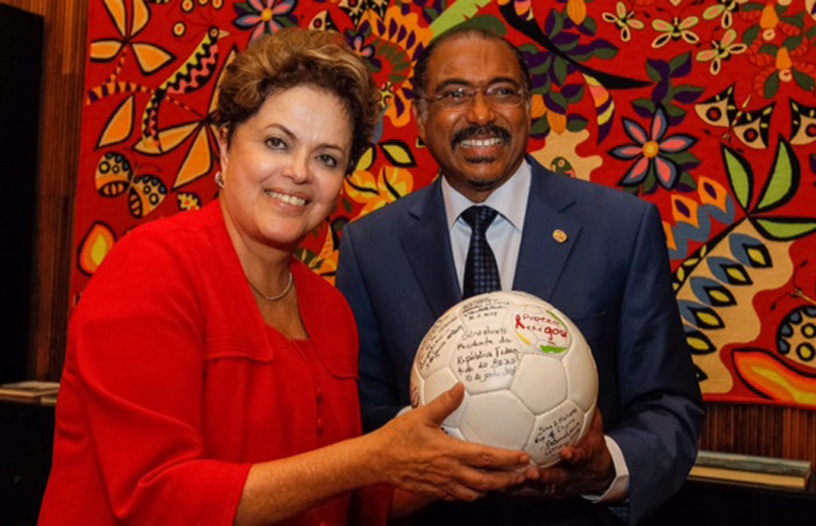
At this time of year, soccer fans (or football fans, depending on where you are from)  around the world are turning their minds and their televisions to the 2014 FIFA World Cup. With millions across the globe tuning in to cheer for their favorite teams, many international health organizations are tapping into this soccer fanaticism, and employing soccer as an innovative medium to talk about HIV.  Soccer is one of, if not the most popular sport in the world, and groups such as UNAIDS and Grassroots Soccer are using the excitement around this sport to reach out to youth and to facilitate programs to educate them about HIV prevention and stigma reduction.
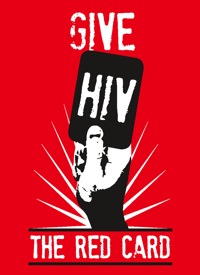
 At the Africa Cup of Nations in January 2013, UNAIDS presented their “Protect the Goal” Campaign, with goals of both preventing and raising awareness of HIV. HIV prevention information was posted on screens in the stadiums and prominent players backed the campaign by reading statements of support for this campaign before each game as they stood before their fans. With thousands of fans who look up to these teams and players, the campaign had a radically successful start [1]. A year and a half later, Protect the Goal has come to Brazil for the 2014 FIFA World Cup. Now backed by the President of Brazil, [2] Protect the Goal has been able to make an even greater impact, especially by offering free HIV tests to fans in Brazilian host cities. Renowned players like David Luiz are also joining the campaign and calling on their thousands of fans to join them in stopping the spread of HIV and stigma [3].
 Another organization, Grassroots Soccer, has taken a different approach to using soccer as a means of reducing HIV. They have built and refined a curriculum called “Skillz”, a new approach that uses soccer exercises to help kids learn about HIV risks and prevention.  For example, in one of their activities, called “Risk Field,” “participants dribble a soccer ball in between cones representing HIV-related risks—multiple partners, drug/alcohol abuse, sugar daddies, etc. If one player hits a cone, he and his teammates must complete 3 pushups, showing how the consequences of one person’s risk can not only affect him, but also his friends, family, and community" [4]. This is a revolutionary new way of educating kids, and allows the participants to feel more engaged in what they are learning.
Grassroots Soccer is using methods  that have proven results. One study in Zimbabwe found that, among many other encouraging statistics, students participating in the program who knew where to go for problems related to HIV increased dramatically, from 47% to 76% [5]. Like the Protect the Goal campaign, Grassroots Soccer is backed by a number of well-known players, such as AlexSong, Oguchi Onyewu, Christen Press, and more, [6] and is therefore able to reach a wide audience of fans that look up to and respect these players.


As evident by the campaigns and programs above, it is undeniable that sports have a great influence and can be used to unite and educate groups of people. Nelson Mandela said it best, “Sport has the power to change the world. It has the power to inspire. It has the power to unite people in a way that little else does. It speaks to youth in a language they understand. Sport can create hope where once there was only despair.” Soccer is more than just a game; it’s a powerful tool that can bring motivation, solutions, and hope to people around the world working to end HIV and the associated stigma and discrimination.


References:


Tuesday, June 24, 2014

HIV Care for Refugees

By Adriana Ganci 

Since 2001, June 20th has been recognized as World Refugee Day.  A refugee is defined as someone who is forced to flee her country due to violence or fear of persecution due to reasons of “race, religion, nationality, political opinion or membership in a particular social group.”  [1]  Refugees face an array of difficulties in resettling. They are often hundreds or thousands of miles away from home, in a place where they know no one and in a culture of which they are not a part. Resettlement can be particularly difficult for those refugees and displaced persons living with HIV. They are subject to facing a variety of the stigma of being in a cultural or ethnic minority as well as  the stigma of living with HIV.

Luckily, there are agencies who make it part of their mission to guide HIV-positive populations to the proper resources and help ease their transition as much as possible. The UN Refugee Agency (UNHCR) has seven strategic objectives in their Strategic Plan for HIV and AIDS, these include:

  1. Protection  
  2. Coordination and Integration      
  3. Prevention  
  4. Care, Support and Treatment      
  5. Durable Solutions 
  6. Capacity Building  
  7. Assessments, Surveillance, Monitoring and Evaluation and Operational Research

In setting these seven objectives, UNHCR supports and promotes HIV and AIDS programs which aim to reduce mortality and enhance the quality of life among refugees. The UNHCR works with many partners to ensure the best care for refugees, including governments, NGOs, and health care providers. [2]

Unfortunately, all HIV care for refugees is not created equally. The heath care the individual receives is obviously based on the country in which they have resettled. In the U.S., those with refugee status are given a caseworker that will set them up with Medicaid. In Canada they are enrolled in the Interim Federal Health Program, ensuring that they will receive the full gamut of HIV services. But if a refugee is resettled into Ethiopia their access to HIV care will be limited. Resettlement agencies will often try to take these caveats into consideration when placing a person or a family, but nothing is guaranteed. Organizations such as UNHCR and the International Organization for Migration work to advocate for refugees in order to find a home that can accommodate these needs. However, even if placed in a setting with a strong health care system, cultural differences may still pose additional challenges. For example, a traditional woman from Somalia might not be comfortable in an urban health clinic that is largely geared toward supporting homosexuals, indicating a strong need to guide refugees to culturally appropriate resources.  

Fortunately, policies regarding refugees and HIV are improving. In recent years, UNAIDS and the World Health Organization have come out against mandatory HIV testing of refugees, stating that it is a violation of human rights and leaves those living with HIV open to discrimination and persecution. [3] Hopefully, policies like this will continue to be made to improve the lives of refugees living with HIV. 


Furthermore, there have been more resources published for resettlement agencies, host countries, and for refugees themselves. The U.S. Committee for Refugees and Immigrants has included a guidebook for resettlement agencies serving refugees with HIV/AIDS.[4] The USCRI also has many toolkits for healthy living in many languages. They cover everything from mental health, to communicable disease, to cultural orientation, all of which are relevant to those living with HIV and can be found here.[5]  Canada’s Source for HIV and Hepatitis C Information also has lengthy information available for both refugees and immigrants living with HIV. [6] 

While it is fantastic that these resources exist, they are still limited. With over 15 million refugees in the world, many of whom come from high HIV prevalence areas, there needs to be more advocates for those living with HIV. Health care services can be complicated enough to navigate in one’s own country, let alone in a foreign setting, with the stigma of living with HIV and being  a national, ethnic, or religious minority posing an additional hurdle.  Many organizations suggest lawyers for those refugees living with HIV to ensure that they get the support they need. However, the burden cannot be on these populations who are already grappling with so many challenges and changes. We must urge governments, intergovermental organizations, NGOs, and other stakeholders to put their efforts into improving the lives of these refugees living with HIV so that they may lead the fulfilling life everyone deserves.


1.   http://www.unrefugees.org/site/c.lfIQKSOwFqG/b.4950731/k.A894/What_is_a_refugee.htm
2.  http://www.unhcr.org/488495642.pdf
3.  http://www.unfpa.org/emergencies/manual/5a1.htm
4.http://www.uscrirefugees.org/2010Website/5_Resources/5_1_For_Refugees_Immigrants/5_        1_1_Health/5_1_1_1_Healthy_Living_Toolkit/5_1_1_1_1_Communicable_Diseases/English_Guidebook_HIV.pdf
5. http://www.refugees.org/resources/for-service-providers/hiv-aids.html
6. http://www.catie.ca/en/practical-guides/managing-your-health/17 


Monday, June 9, 2014

amfAR’s GMT Initiative is Combating the Stigma and Discrimination that Fuel HIV Infections among LGBT Worldwide

By: Lucile Scott, amfAR

Since its inception in 2007, amfAR’s GMT Initiative has provided financial and technical support to over 164 community organizations working on the front lines of the epidemic to reduce the spread and impact of HIV among gay men, other men who have sex with men, and transgender individuals (collectively, GMT) in low- and middle-income countries. Worldwide, as treatment access and prevention science improves, stigma and discrimination is often the main barrier to reducing infection rates and improving access to care among GMT. Stigma and discrimination affect every aspect and stage of HIV treatment and prevention, from putting individuals at greater risk of engaging in high-risk behavior that can lead to HIV infection to preventing them from accessing health and testing services to stopping governments from targeting them with HIV treatment and prevention efforts—though they are often one of -- if not the-- most impacted populations in that government’s country.

amfAR launches a new report providing the first-ever
comprehensive analysis of the financing and implementation
of HIV programs for GMT in Southern Africa
The GMT Initiative provides funding and support for localized capacity-strengthening mentoring. This helps grantee partners develop advocacy, outreach, and training programs that target GMT, healthcare providers, governments, and the general population to reduce the stigma and discrimination they face. Many are doing this work in countries where homosexuality is illegal, and HIV rates are high.

Through these programs, our grantees
-train and empower members of the GMT community to perform peer HIV services and advocate for their rights
-train healthcare workers about how to provide GMT with stigma and discrimination-free care
-advocate for governments to overturn discriminatory policies that deny GMT rights, including proper healthcare
-train the governments about how to better reach GMT with HIV messaging once they have removed policy and legal barriers to doing so. 

The organizations also organize campaigns, performances, protests, and more that aim to educate the general population about the GMT community. The GMT Initiative continues to support our partner organizations as they grow and work to formalize and evaluate their programs to improve their impact and to better understand and pass on to others what strategies work most effectively.

In the past year, while our grantees have witnessed many milestones in combating stigma and discrimination, they have also witnessed much backlash to that progress. For instance, in Uganda, advocates recently succeeded in convincing the government to include GMT in their national HIV strategy. However, in December the Parliament passed a law criminalizing “promotion of homosexuality,” forcing those providing GMT with HIV services, including our grantee partner Spectrum Uganda, to—at-the-least temporarily—shut those services down. While that bill has not yet been signed into law by the President, similar bills passed in Nigeria and Russia were. They have also severely and, unless they are repealed, permanently curtailed our grantees’ and other organizations’ ability to do HIV outreach among GMT, reversing years of progress, and wasting millions of dollars in global AIDS funding.
amfAR grantee-partner SOMOSGAY's new
 men's health center during its launch party

But in Armenia, as a similar law was under debate (that has not passed), grantee partner We for Civil Equality worked with doctors, social workers and human rights structures within the Armenian government to create a strong medical referral system to help GMT living with HIV access non-discriminatory care and obtain their life-saving medications. And in Paraguay, our long-time grantee partner SOMOSGAY opened a men’s health center created to cater to the needs of GMT. Three grantee partner organizations in Togo hosted a workshop for members of the media on how to improve their stigmatizing portrayals of GMT. And in Argentina, grantee partner Asociación de Travestis, Transexuales, Transgéneros Argentinas (ATTTA) started shooting a documentary to educate the general population about the discrimination and barriers to equal rights that trans people experience each day.

A film shoot for amfAR grantee-partner ATTTA's documentary
about the fight for trans rights in Argentina  
As Yves Yomb, executive director of Alternatives-Cameroun, told us in July, shortly after a string of attacks against Cameroonian LGBT activists and organizations forced Alternatives to shut down their HIV outreach operations, “We know this revolution will take time, as do all the revolutions in the world.  We don't know if we will see the result, but we hope in 10 or 20 years, people will say the fight for gay rights began in 2005, and thanks to them we have the rights that we have at this moment.”

 And these are just a few of our grantee partners’ stories and successes. To read more about how they confront and combat stigma and discrimination, please read our GMT Initiative blog, Grassroots. 

Tuesday, June 3, 2014

Orange, Fuzzy, Feisty, and HIV-Positive: Meet Kami

By: Adriana Ganci

Since its premiere on public television in 1969, Sesame Street has been a keystone program in teaching children about diversity and acceptance. The show has historically depicted people of different ethnicities, nationalities, religions and abilities. Sesame Street is, in fact, where many children begin their educational journeys. Big Bird and Elmo are household names. But how many Americans have heard of the Muppet, Kami? Chances are, not many. But everyone should.

Kami is a character who originated on South Africa’s Takalani Sesame in 2002. She has a feisty spirit and loves the outdoors and playing soccer. She is also HIV-positive. In a country where 5.5 million people are living with HIV, the social impact of this issue on children is not one that can be ignored. Because the show is aimed at little tykes aged three-seven, the goal of this programming is not to teach about the importance of protected sex or about the dangers of sharing intravenous needles. The goal, instead, is to portray the life of Kami in a way that resembles the lives of hundreds of thousands of children in South Africa – the life of a child who loves to have fun, the life of a child who lives with HIV, and the life of a child whose parent died as a result of having AIDS. For too long there has been a culture of stigma and silence regarding this globally pervasive issue. Kami seeks to reduce this HIV-related stigma by exposing children to a friendly, likeable, and relatable character from a very young age.

How exactly does Kami work to fight against stigma? She loves playing the train game where everyone holds each other’s shoulders and pretends they are a train. In sharing this game – which, of course, involves physically touching your friends – Kami teaches us that playing games and giving hugs and high fives cannot transfer HIV. Kami also has a memory box that her mother left her before she passed away, filled with happy mementos like pictures of the two of them and her mom’s favorite scarf. Grieving is a very important process for children who lose parents, and Kami teaches us that, while the process is very difficult, evoking happy memories is a very good way to cope. When Kami isn’t singing about keeping the earth clean or kicking a soccer ball around, she is talking with the likes of Archbishop Desmond Tutu and Former President Bill Clinton, and thanking them for the work they’ve done for children like herself living with HIV. Both men have told Kami that she is the real hero. Kami’s accolade doesn’t end there – UNICEF also named Kami a “Champion of Children” in 2003. [1]

Kami was created by Sesame Workshop, the nonprofit organization behind the 45 years of work that Sesame Street has done to acknowledge key critical educational needs in the now 150 countries in which the show airs. [2] Sesame Workshop brings in experts to consult on creative ways to relay these important lessons to children. Projects by Sesame Workshop include an entire array of academic, social and emotional topics: they run the gamut from introducing a Muppet whose father is in prison to airing episodes discussing the importance of improving the education of girls worldwide.


Each project includes extensive post-production research on the actual educational impacts of the programs. Through this research, Sesame Workshop discovered that parents who have seen Kami on television are twice as likely to talk to their children about HIV and AIDS than parents who do not know Kami. Sesame Workshop has also concluded that since the introduction of Kami into the cast, children exposed to Takalani Sesame have demonstrated measurable increases in their knowledge of HIV, de-stigmatization of HIV, and the ability to cope with illness. [3] Due to Kami’s success in South Africa, producers who were creating Nigeria’s Sesame Square decided to also use Kami with the show’s launch in 2010.With nearly 278,000 children in Nigeria living with HIV, there was a need for a character like Kami. Bearing in mind that only about a quarter of Nigerian households have a television, the show’s creators have also created a campaign that extends to radio, cell phones, publications and school materials. [4]

When a person is able to closely identify with something like HIV they are generally able to understand it better. It also makes good sense that we, as humans, are less fearful, and thus less stigmatizing, of things we clearly understand.  Thus, using someone who is vibrant, young, and fun-loving like Kami to introduce the subject of HIV to children of a young age helps to reinforce the idea that those living with HIV are people just like those not living with HIV. Aiming these lessons at children will help South Africa and Nigeria to end the culture of silence and stigma surrounding HIV which, in turn, has the potential to lower the infection rates in those countries. Kami has the potential to help the next generation of South African children become the most accepting generation yet. This is fitting since “Kami” is the Setswana word for “acceptance”.

When Kami joined Takalani Sesame in 2002, some conservative legislators in the U.S. sent a letter to PBS stating that if PBS were to utilize the HIV-positive character in the American show, their funding would be threatened. [5] American children have come to love Muppets who are in wheelchairs, Muppets who are blind, Muppets who are different colors and those that practice different faiths. Hiding the idea of HIV from children will only continue to feed ignorance and fear and encourage stigma towards those living with HIV for years to come. There is no reason that American children would not come to adore Kami, just as others did in South Africa and Nigeria. With a name that literally means “acceptance”, it sounds like it is definitely time to make Kami a household American name.

1.  http://www.unicef.org/media/media_16631.htm
2. http://www.sesameworkshop.org/what-we-do/our-research-model/
3. http://www.sesameworkshop.org/what-we-do/our-research-model/
4. http://www.cnn.com/2010/SHOWBIZ/TV/10/06/sesame.street.nigeria/
5. http://www.queerty.com/could-hiv-muppet-kami-ever-move-into-americas-sesame-street-20100104


Wednesday, May 21, 2014

New HIV Bill in Uganda Will Harm Women, Children, and Families

Last week, the Government of Uganda took a major step back in the fight against HIV.
The bill, entitled “HIV Prevention and AIDS Control Bill,” that President Yoweri  Museveni is being asked to sign into law, criminalizes the transmission of HIV, makes it legal for doctors to disclose their patients’ HIV status to partners and families without consent, and, last but not least, calls for mandatory testing for pregnant women and their partners.
This new law would be a major step backward for a country that, for 30 years, has been a leader in tackling HIV head on. Ten years ago, I chose to do my dissertation research in Uganda because the country was on the forefront of using innovative, human-rights based approaches to combat the spread of HIV and to ensure that those living with HIV could lead full lives. Uganda was a veritable hotbed of innovative approaches to HIV prevention, care and treatment. Home-based HIV care and treatment, couples counseling, and positive prevention all emerged from Uganda and are now being implemented in countries around the world. Strong leadership and involvement of people living with HIV was a hallmark of these efforts.
But the news from Uganda marks a radical shift. Rather than exploring new ways to combat HIV and empower individuals, the bill stigmatizes and alienates people living with HIV and those who may be living with HIV. Instead of ramping up efforts to engage women in antenatal services to ‘get to zero’ new infant infections by 2015, a global goal set forward by UNAIDS in 2013, the bill infringes on women’s rights and will almost certainly lead to large reductions in the number of women attending antenatal care if enacted.
Such a back slide is worrying, in a country where 6.1% of pregnant women are living with HIV. In order to prevent transmission of HIV from mother to child (PMTCT), pregnant women must engage in what health officials call a ‘cascade’ of services, beginning with an HIV test.
Currently, about two-thirds of pregnant women test for HIV in Uganda. The next step for women who test positive is to begin taking antiretroviral therapy (ART). In Uganda, about 50% of pregnant women living with HIV receive ART. At birth, babies born to mothers living with HIV should receive oral Nevirapine followed by a 6-month course of antiretroviral prophylaxis. In Uganda, only 22% of infants born to mothers living with HIV receive antiretroviral prophylaxis. Stigma, or the fear of experiencing stigma, is one of the key challenges to improving the coverage of these critical PMTCT services.
Globally, stigma and discrimination have been revealed as among the most important barriers to pregnant women's acceptance of HIV testing during antenatal care, enrollment in PMTCT, and retention and adherence in these programs, all of which are critical to reducing transmission.  Indeed, it has been estimated that more than half of vertical transmissions in some settings can be attributed to the cumulative effect of stigma at each point of the cascade.  The new law in Uganda will only serve to fuel stigma and discrimination.
While getting all pregnant women to test for HIV is a good thing, making testing mandatory is not the way to go about it. Rather than increasing HIV testing, mandatory testing has been shown to lead some women to avoiding attending antenatal care altogether. As the PMTCT cascade of services is often only accessible through antenatal clinics, any policy that reduces clinic attendance is liable to increase the number of infants born with HIV. Coupling mandatory testing and criminalization is a double whammy, as those who test positive could face prosecution from partners who claim they were willfully infected. Adding the further injustice of dismantling provider confidentiality is the final nail in the coffin, both metaphorically and realistically. Under these circumstances, why would any Ugandan woman attend an antenatal clinic?
According to our friends at the International Community of Women Living with HIV,
“Women…will shy away from medical services, negatively impacting antenatal care attendance. The devastating result of this will be that more children are at risk of being infected through vertical transmission. Currently, by using proven strategies that emphasize voluntary counseling and testing, Uganda is striving toward zero infections from mother to child. However, Uganda’s gains could be lost if women are forced to test every time they visit a health facility.”
The truth is that throughout Uganda, women are already getting tested. Current testing approaches, including home-based testing and provider-initiated, or ‘opt-out’, testing have greatly increased HIV testing in Uganda over the last decade. This new legislation just serves as yet another repressive measure, targeted at women, but ultimately affecting men and entire families, to stigmatize anyone living with HIV.
The global community cannot stand-by and watch the erosion of decades of progress in reducing HIV transmission and in making sure that those living with HIV are able to receive quality care free from discrimination. We must not be complacent. The lives of thousands of mothers and children in Uganda hang in the balance.
So what can we do? Advocates, policy makers and researchers alike must urge President Museveni to weigh the risk of the reversals that could result from criminalization and mandatory testing under this legislation, in contrast to the tremendous gains Uganda has made from the policy of positive-living and a human rights-based approach to HIV prevention and management. Should the law be signed, we must not give up, but rather continue to urge the Government of Uganda to use all appropriate means to reconsider it, including during the development of regulations for its implementation by the Minister of Health. And lastly, we must encourage the Government of Uganda to once again be a leader in the global response to HIV by championing evidence-based, inclusive and supportive HIV policies instead of policies driven by fear and stigma. 

Wednesday, April 9, 2014

For National Youth HIV/AIDS Awareness Day: A Timeline of HIV in American Children


Happy National Youth HIV/AIDS Awareness Day, #StigmaWarriors! Today our blog post will be about the history of HIV and HIV-related stigma and discrimination in children and young adults. As you’ll see, the United States has come a long way from the early days of the HIV epidemic, especially when it comes to the care and treatment of children and young adults who are living with HIV. So let’s get started with our history lesson!


1969
The first known case of AIDS in children/young adults in the United States wasn’t discovered to be AIDS until 1987. Robert Rayford, a sixteen year old from St. Louis, Missouri, died of a mysterious illness in 1969 [1], several months after checking himself into the hospital for treatment. When doctors performed an autopsy, they found several abnormalities, and were so baffled by Robert’s illness that they preserved samples of his tissue. In 1987, several years after the HIV epidemic was first identified in the United States, those same doctors tested Robert’s tissue samples, and they came back positive for HIV.

1982
On December 10th, the CDC reported a case of unexplained immunodeficiency [2] (later determined to be HIV) in an infant who had received a blood transfusion. Over the next several weeks, twenty-two more cases of infants [3] who were either living with or had died from unexplained immunodeficiency were reported. Most of the children were diagnosed with immunodeficiency after a blood transfusion or it was found that the condition was transmitted to them through their mother.

1985
Ryan White [4], a hemophiliac who contracted HIV from a blood transfusion, was kicked out of Western Middle School in Kokomo, Indiana, after it was disclosed to school officials that he was living with HIV. After a drawn out court battle, White was allowed to return to school, but his parents decided to withdraw him from Western and enrolled him in Hamilton Heights High School in Cicero, Indiana, where school officials and students welcomed him with open arms after being educated about HIV. This was the first nationally known case of the effects of HIV stigma.

In December, the US Public Health Service released the first recommendations for the prevention of mother-to-child transmission [5].


1987
A federal judge ordered the DeSoto County School Board in Arcadia, Florida, to allow the three HIV-positive Ray brothers (Ricky, Robert, and Randy) to attend school after they were kicked out because the parents of other children did not want children living with HIV to attend the school [6]. The brothers were hemophiliacs and most likely contracted HIV via blood transfusions. After the judge’s decision was handed down, other parents began withdrawing their children from school, and on August 28th the Ray’s home was burned down, prompting them to flee Arcadia [7].


1988
Elizabeth Glaser, wife of Starsky and Hutch star Paul Michael Glaser and a mother living with HIV, founded the Pediatric AIDS Foundation (now the Elizabeth Glaser PediatricAIDS Foundation) [7] after their daughter Ariel died of AIDS. At this time there were no approved antiretroviral drugs for children living with HIV, and the Glasers' son Jake was dying of AIDS. Through lobbying, the EGPAF was able to get the FDA to approve antiretroviral treatments for children.


1989
Ryan White spoke before the President’s Commission about the HIV Epidemic about the HIV-related stigma he faced after his diagnosis [8], and emphasized how HIV education helped him be more accepted at his new school in Cicero. As a result, schools across the nation implemented education programs about HIV in health classes.

1990
HIV activist Ryan White died in April at the age of eighteen. Four months later, President George H. W. Bush signed the Ryan White CARE Act [9] into law, which provides government funding for HIV/AIDS research. It has been reauthorized four times, most recently in 2009.


1998
Five years after Ricky Ray’s death, Congress enacted the Ricky Ray Hemophilia Relief Fund Act [10], which authorizes payment to hemophiliacs and other people living with blood clotting disorders who were infected with HIV via contaminated blood transfusions between 1982 and 1987.

2002
Twenty years after HIV was confirmed in children, approximately thirteen million children and young people were living with HIV, mostly in Africa [11].

2006
The first National Women’s and Girl’s HIV/AIDS Awareness Day was commemorated on March 6th.


2013
In March, doctors at the CDC confirmed that a toddler in Mississippi [12] who had been diagnosed with HIV at birth had been “functionally cured” of HIV, leading to hope for a cure in children who were transmitted HIV in utero. One year later, the toddler was still free of HIV.

The first National Youth HIV/AIDS Awareness Day was commemorated on April 10th.


2014
In March, an infant in California was confirmed to be“functionally cured” of HIV [13] after receiving the same treatment as the Mississippi toddler who had been “functionally cured” of HIV one year earlier. The CDC is currently trying to work out clinical trials in order to find a cure for children prenatally exposed to HIV.


The Future
What an amazing timeline! It truly shows how the treatment of people living with HIV, especially children and young adults, has changed. Twenty years ago there were no treatments for children living with HIV, and now there are two toddlers who have been functionally cured of it! Isn’t modern medicine amazing? And now, children living with HIV don’t have to worry about being kicked out of school if their condition is diagnosed. Ryan White and the Ray brothers’ legacy is proof of that.

Who knows what the future holds? What we know it holds is a lot of hope for those living with HIV to potentially find preventative vaccines or even cures. It also holds hope for lives free of HIV-related stigma and discrimination.


Happy National Youth HIV/AIDS Awareness Day!